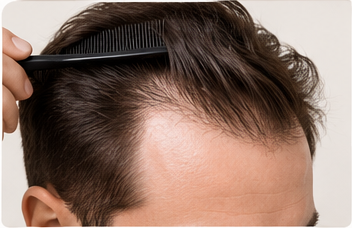
Hairline recession
The frontal hairline appears to be moving back or changing shape.
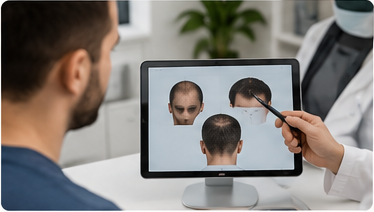
Hair restoration assessment focuses on where density has changed, how the pattern has progressed and which areas matter most to you.
Assessment for hairline, crown and overall density changes.

Hairline recession, crown visibility and reduced overall density can progress in different patterns.
The assessment helps describe the pattern, timeline and priority areas before a restoration direction is discussed.
Clear observations about location, progression and density help make the consultation more focused.
The frontal hairline appears to be moving back or changing shape.
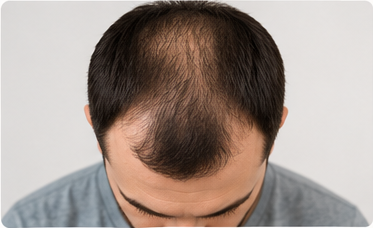
More scalp is visible around the crown than before.
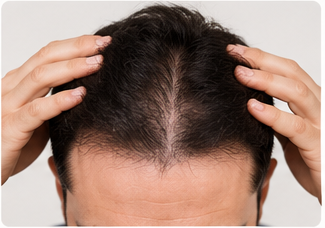
Hair looks less full across a wider area rather than one localised point.
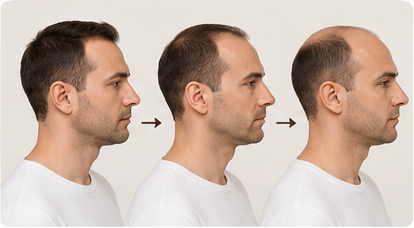
The pattern continues to change and you want to understand the next step.
A restoration plan is easier to understand when the current pattern and the result you want to discuss are clear.
Identify when the concern started and whether the hairline, crown or wider density has changed.
Decide which area or appearance change matters most to the consultation.
Discuss which restoration direction is appropriate to explore after assessing the pattern.
Understand how progress will be reviewed and when reassessment may be useful.
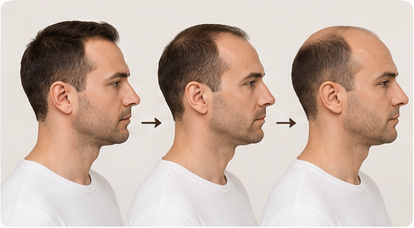
When comparing appearance, try to keep lighting, angle, hair length and styling as similar as possible so changes are easier to review.
Think about the timeline, the area you want to prioritise and what you want the consultation to clarify.
When did you first notice the hairline, crown or density change?
Has the pattern stayed stable or continued to progress?
Which area matters most to you right now?
What previous hair or scalp treatments have you tried?
No. Hair restoration is a broader discussion. The next step depends on the pattern, current hair and scalp condition and the goal being assessed.
Knowing whether the change is stable or continuing helps the consultation describe the current pattern and plan appropriate follow-up.
Previous photographs can be useful when they clearly show the hairline, crown or overall density and help document how appearance has changed.
The assessment can compare the hairline, crown and wider density so the pattern and priority areas are easier to define.
Bring the timeline, pattern and priority area into one focused consultation.